Fake reviews can be the hidden saboteurs of business success, misleading consumers and tarnishing reputations, impacting consumer trust and brand reputation. With platforms like Google, Yelp, and Facebook at the forefront, it’s crucial to arm yourself with tools for review authenticity, enabling you to identify and report these deceptive practices. In this guide, we’ll explore what fake reviews look like, how they impact both businesses and customers, and the steps you can take to spot fake reviews and report them effectively. Let’s dive in!
Definition, Importance, and Review Guidelines
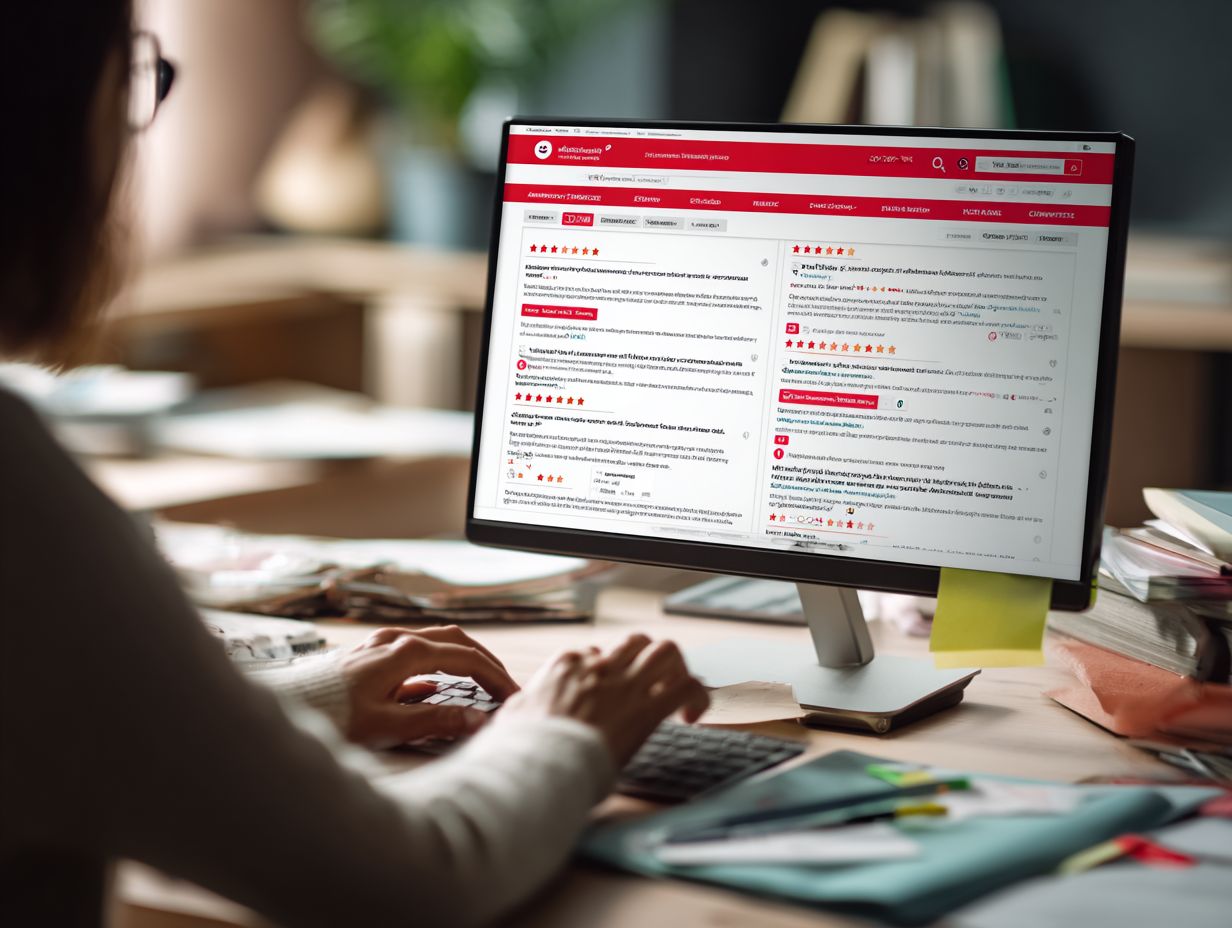
Fake reviews are essentially fabricated assessments intended to mislead consumers, ultimately undermining the value of authentic user-generated content, which violates review guidelines. These deceptive endorsements can distort consumer perceptions, affecting online reputation management and making a product appear more appealing than it truly is.
For example, research indicates that 70% of consumers are influenced by online reviews, yet 15% of shoppers report encountering fake reviews during their purchasing journey.
To address this issue, businesses can utilize tools like Fakespot or ReviewMeta for review analysis, which assess product reviews for authenticity. Additionally, educating consumers on how to spot red flags-such as overly generic praise or a sudden influx of reviews within a short timeframe-can give the power to them to make more informed decisions.
Impact on Businesses and Consumers
Businesses can potentially lose up to 30% of their revenue due to negative reviews and review fraud, which are often exacerbated by fake evaluations. This erosion of trust can lead to significant consequences for business integrity.
For example, in 2018, the restaurant chain ‘Olive Garden’ experienced a decline after a series of fraudulent reviews appeared online, resulting in a sharp decrease in revenue.
In a similar vein, tech companies such as ‘Yelp’ and ‘Amazon’ have grappled with the authenticity of their review systems, causing customers to grow increasingly skeptical.
Addressing this challenge requires businesses to implement review monitoring and utilize tools like ‘ReviewTrackers’ and ‘Trustpilot.’
By fostering transparency and encouraging genuine feedback from satisfied customers, companies can effectively engage with their audience. This engagement can help restore consumer confidence and mitigate financial losses.
Identifying and Reporting Fake Reviews
Recognizing fake reviews requires an awareness of their characteristics and the common red flags that indicate they may not be authentic.
By learning to identify these signs, one can better assess the credibility of the reviews encountered.
Common Characteristics and Deception Detection in Fake Reviews
Fake reviews tend to display certain patterns, such as overly positive language, vague details, and a noticeable lack of specificity regarding the product or service.
Some common characteristics of fake reviews include:
- An excessive use of superlatives, such as “best ever” or “unbelievable quality,” which can often come across as exaggerated.
- Generic usernames like “user123,” making it challenging to evaluate their credibility.
- Repetitive phrases appearing across multiple reviews, suggesting a scripted nature.
- A noticeable absence of personal anecdotes or specific product features, which raises a red flag.
- A dismissal of legitimate criticisms, presenting a one-sided perspective that seems too curated to be genuine.
Red Flags and Review Patterns to Look For
Key red flags to watch for include reviews that share similar wording, repetitive patterns, and accounts that display minimal activity or history, indicating potential review manipulation. Other warning signs consist of overly positive language that lacks detail or specifics about the product, which may suggest a potentially fraudulent review.
Tools such as Fakespot and ReviewMeta can be incredibly useful for review verification and assessing the credibility of reviews. For example, if Fakespot flags a review as having a low reliability score, it serves as a warning to exercise caution.
Similarly, if ReviewMeta reveals suspicious patterns of ratings across multiple products, this could indicate coordinated efforts to inflate reviews, thereby further diminishing the trustworthiness of the feedback associated with the product.
Spotting Fake Reviews on Google
Google’s review system is vital in shaping public perception, which is why it’s important to understand how to identify fake submissions.
Recognizing the signs of inauthentic reviews can help ensure that you are relying on accurate information when making decisions based on these ratings.
Google’s Review System Overview

Google’s review system is designed to aggregate user feedback; however, it is also vulnerable to manipulation through fake reviews. To address this issue, Google utilizes sophisticated algorithms that analyze patterns and user behavior.
For instance, if a newly created account posts multiple reviews in a short period, the system flags these for potential review fraud and spam.
Additionally, Google continuously refines its machine learning models to improve detection capabilities against manipulated ratings. Despite these efforts, challenges persist, particularly due to the evolving strategies of fraudulent reviewers and the complexities involved in verifying authentic user experiences.
As a result, there is ongoing scrutiny regarding the reliability of the system.
Tools and Techniques for Analysis
Utilizing tools such as Fakespot and ReviewMeta can greatly assist consumers in effectively analyzing the reliability of Google reviews.
Fakespot employs algorithms to examine the authenticity of reviews by detecting patterns, including the frequent use of specific phrases that may suggest inauthenticity. It assigns a letter grade, ranging from A to F, to indicate the trustworthiness of the reviews, thereby aiding users in making informed decisions.
On the other hand, ReviewMeta evaluates the quality of reviews by filtering out suspicious entries and providing a recalibrated star rating that better reflects reliable feedback. Both tools give the power to consumers to concentrate on genuine products by offering concrete metrics that underscore the credibility of user testimonials.
Spotting Fake Reviews on Yelp
Yelp uses a distinctive filtering process to ensure the authenticity of reviews; however, it is important for users to remain vigilant against deceptive practices.
Yelp’s Review Filtering and Review Ethics Process
Yelp employs an advanced algorithm for reviews that filters based on a variety of criteria, ensuring review consistency and showcasing genuine user experiences. The filtering process evaluates several factors, including the reliability of the reviewer, the quality and specificity of the review, and patterns of behavior exhibited by users.
For example, reviews from new users might be subjected to more scrutiny, while those from frequently active reviewers are generally considered more credible. Additionally, Yelp utilizes machine learning to detect suspicious review patterns, such as multiple submissions from the same IP address or repeated positive comments about the same business within a short period.
This comprehensive approach is designed to ensure that users receive authentic feedback, thereby protecting them from potentially misleading or fraudulent reviews.
Identifying Suspicious Patterns
Common suspicious patterns on Yelp include multiple reviews originating from the same IP address and a sudden surge of positive feedback, indicating potential online scams. It is also important to pay attention to overly generic comments, such as “great service” or “amazing atmosphere,” which lack specific details about the experience.
Exercise caution if a business receives an unusually high number of reviews in a short period, particularly when those reviews come from accounts with minimal activity.
Utilizing tools like ReviewTrackers or Fakespot can help analyze the credibility of reviews. Additionally, examining reviewer profiles for patterns can be insightful; if an account submits multiple reviews within a week, it may indicate potential authenticity issues.
Spotting Fake Reviews on Facebook
Facebook’s review mechanism provides a platform for social media reviews and users to share their experiences.
However, it also unfortunately creates an opportunity for fraudulent reviews to slip through the cracks.
Understanding Facebook’s Review Mechanism
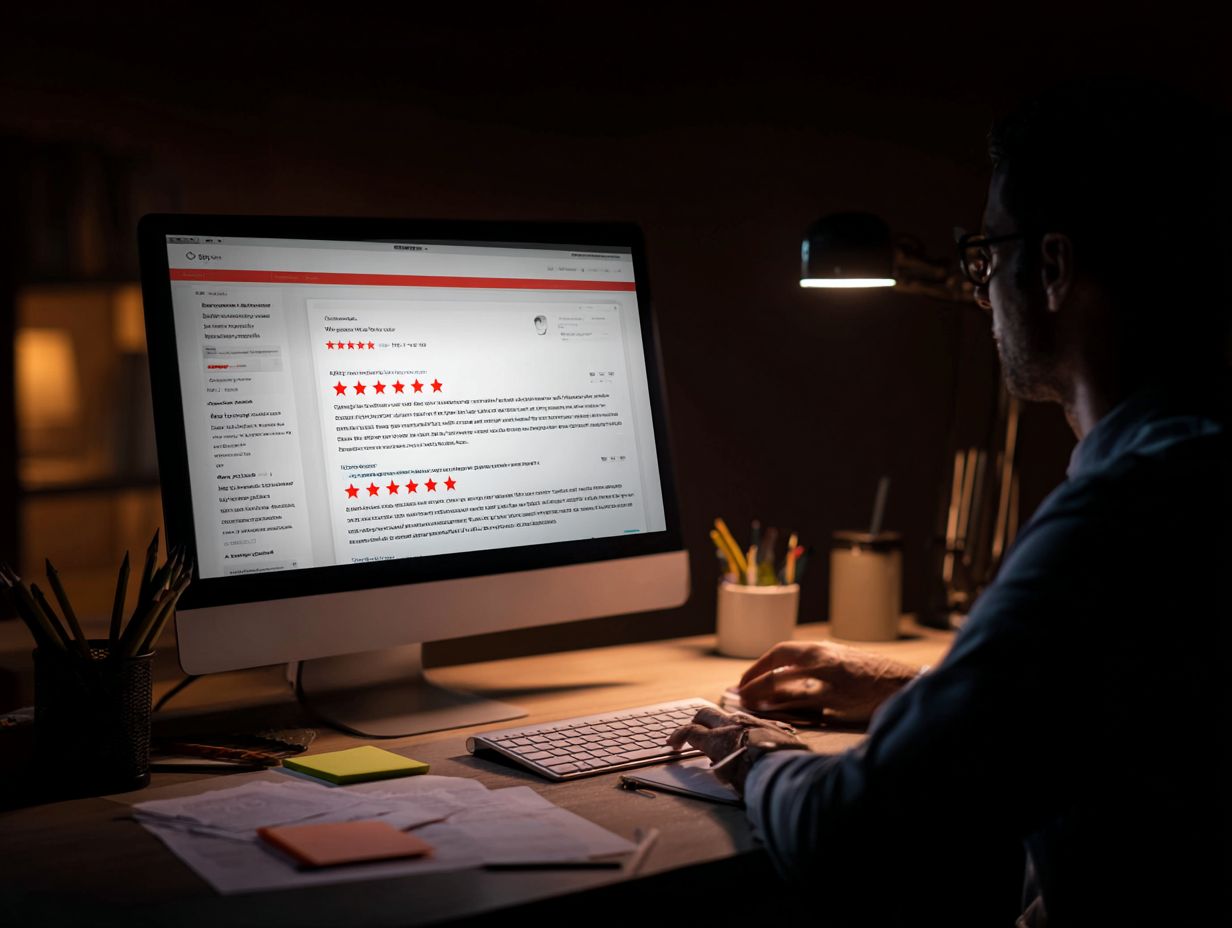
Facebook’s review system is built on the principle of community accountability; however, it is not entirely free from the impact of fake assessments. To address this issue, Facebook employs algorithms and encourages user reports, though challenges persist.
For instance, businesses may receive inflated ratings from fake accounts, which can distort authentic feedback and impact review credibility.
Users play a crucial role in addressing this problem by actively reporting any suspicious reviews they encounter. Facebook promotes honest discourse by implementing a ‘Helpful’ upvote feature that validates reviews and fosters genuine interactions.
For consumers, taking the time to scrutinize reviewer profiles-such as their activity history and frequency of reviews-can be beneficial in identifying potentially biased feedback. Continuous improvements to the algorithm are essential for creating a more trustworthy review environment.
Common Tactics Used in Fake Reviews
Common tactics used in fake reviews include the creation of multiple profiles and the use of generic positive language to mislead consumers.
Another strategy involves posting reviews at strategically chosen times, such as during product launches, to capitalize on the generated buzz and influence purchasing decisions. For example, a company might flood Facebook with glowing reviews from fake accounts just before a product is released.
Fake reviewers often employ vague yet enthusiastic phrases, such as “best product ever” or “totally changed my life,” while failing to provide specific details about their experiences. This method can mislead potential customers by crafting an illusion of widespread satisfaction, impacting consumer protection and customer feedback.
Reporting Fake Reviews and Review Discrepancies
Reporting fake reviews is essential for upholding trust in online platforms, contributing to online transparency and community feedback. By understanding the reporting process, consumers can take an active role in ensuring that their voices are heard and that the integrity of these platforms is maintained.
How to Report on Google, Yelp, and Facebook Reviews
Consumers have the ability to report fake reviews on Google reviews, Yelp reviews, and Facebook reviews through straightforward reporting mechanisms established by each platform.
- To report a fake review on Google, one simply needs to visit the review in question, click on the three-dot menu, and select “Flag as inappropriate,” ensuring review practices are upheld.
- For Yelp, the process is similar: locate the review, click “Report,” and then choose the reason for your report, highlighting review policies.
- In terms of Facebook, navigate to the review you wish to report, click the three dots, and select “Find support or report,” adhering to ethical reviews.
Each of these platforms provides clear links and guidance to assist users further, ensuring that action can be taken effectively against misleading content, enhancing user engagement and digital reputation.
Best Practices for Effective Reporting and Review Optimization
Effective reporting of fake reviews hinges on clear documentation and adherence to platform guidelines to ensure prompt action, contributing to trust signals and SEO for reviews. To enhance your chances of a successful report, consider including the following specific elements:
- Begin by taking screenshots of the fake review alongside your product listing to provide direct evidence, aiding quality assurance.
- Next, explain the context by detailing why the review is misleading or false, using sentiment analysis.
- It is important to familiarize yourself with the respective platform’s policy on fake reviews, as different sites such as Yelp, Google, and Amazon have distinct guidelines that must be followed closely, contributing to brand trust and local business reviews.
- Finally, keep your report concise and factual, focusing on objective language to enhance its credibility, ensuring effective review response.
Frequently Asked Questions on Review Platforms
What are fake reviews and why are they a problem on Google reviews, Yelp reviews, and Facebook reviews?

Fake reviews are reviews that are not authentic or genuine, which means they are not written by actual customers or users. They are a problem because they can mislead potential customers and harm businesses by artificially inflating or damaging their reputation, affecting business reviews and social proof.
How can I spot fake reviews on Google reviews, Yelp reviews, and Facebook reviews?
There are a few red flags to look out for when trying to identify fake reviews. Some common signs include repetitive language, generic or overly positive/negative reviews, and a sudden influx of reviews from new or unverified accounts. It’s also important to check the reviewer’s history and see if they have left similar reviews for other businesses, using review detection tools and sentiment analysis.
What should I do if I see a fake review on Google reviews, Yelp reviews, or Facebook reviews?
If you come across a fake review, the first step is to flag it to the platform, utilizing report abuse mechanisms. On Google and Facebook, you can click on the three dots or the flag icon next to the review. On Yelp, you can click on the “Report review” button. It’s also a good idea to reach out to the business and let them know about the review so they can also take action if necessary.
Will reporting a fake review on Google reviews, Yelp reviews, or Facebook reviews automatically remove it?
No, reporting a fake review does not guarantee its removal. The platform will conduct their own investigation and make a decision based on their review policies, considering review reputation score and feedback analysis. However, it’s still important to report fake reviews as it brings it to their attention and increases the chances of it being removed.
Can businesses get in trouble for posting fake reviews on Google reviews, Yelp reviews, or Facebook reviews?
Yes, businesses can face consequences for posting fake reviews. This can include penalties, removal of the review or even suspension of their account, affecting their digital reputation. It’s important for businesses to follow the guidelines and ethical practices when it comes to online reviews.
How can I protect my business from fake reviews on Google reviews, Yelp reviews, and Facebook reviews?
One way to protect your business from fake reviews is by actively monitoring and managing your online presence, utilizing review monitoring tools and feedback loops. This includes responding to reviews, both positive and negative, and encouraging genuine reviews from satisfied customers. You can also use online review monitoring tools to keep track of your reviews and be alerted of any suspicious activity, enhancing customer insights and review engagement.